
Sarajevo City hall
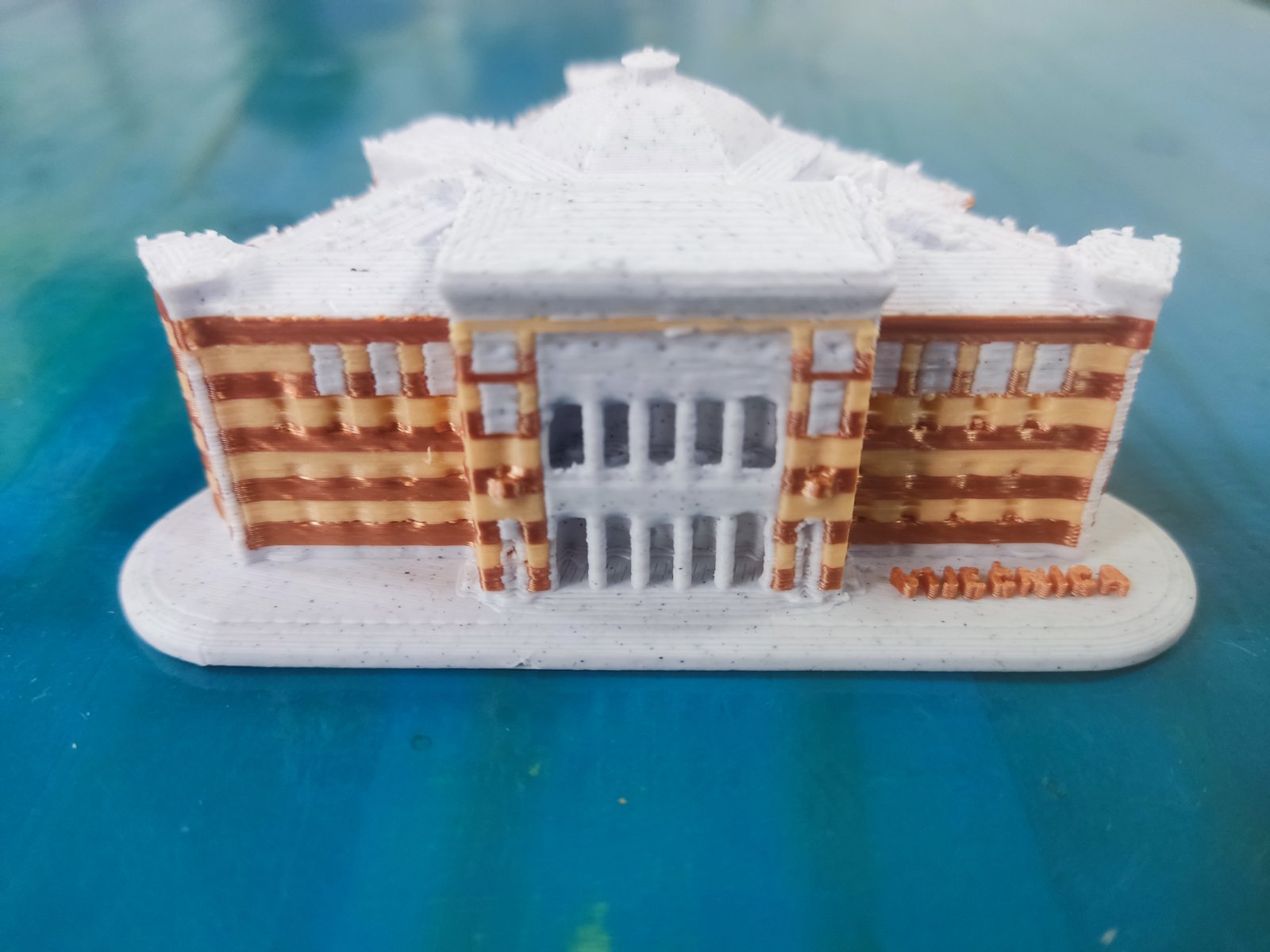
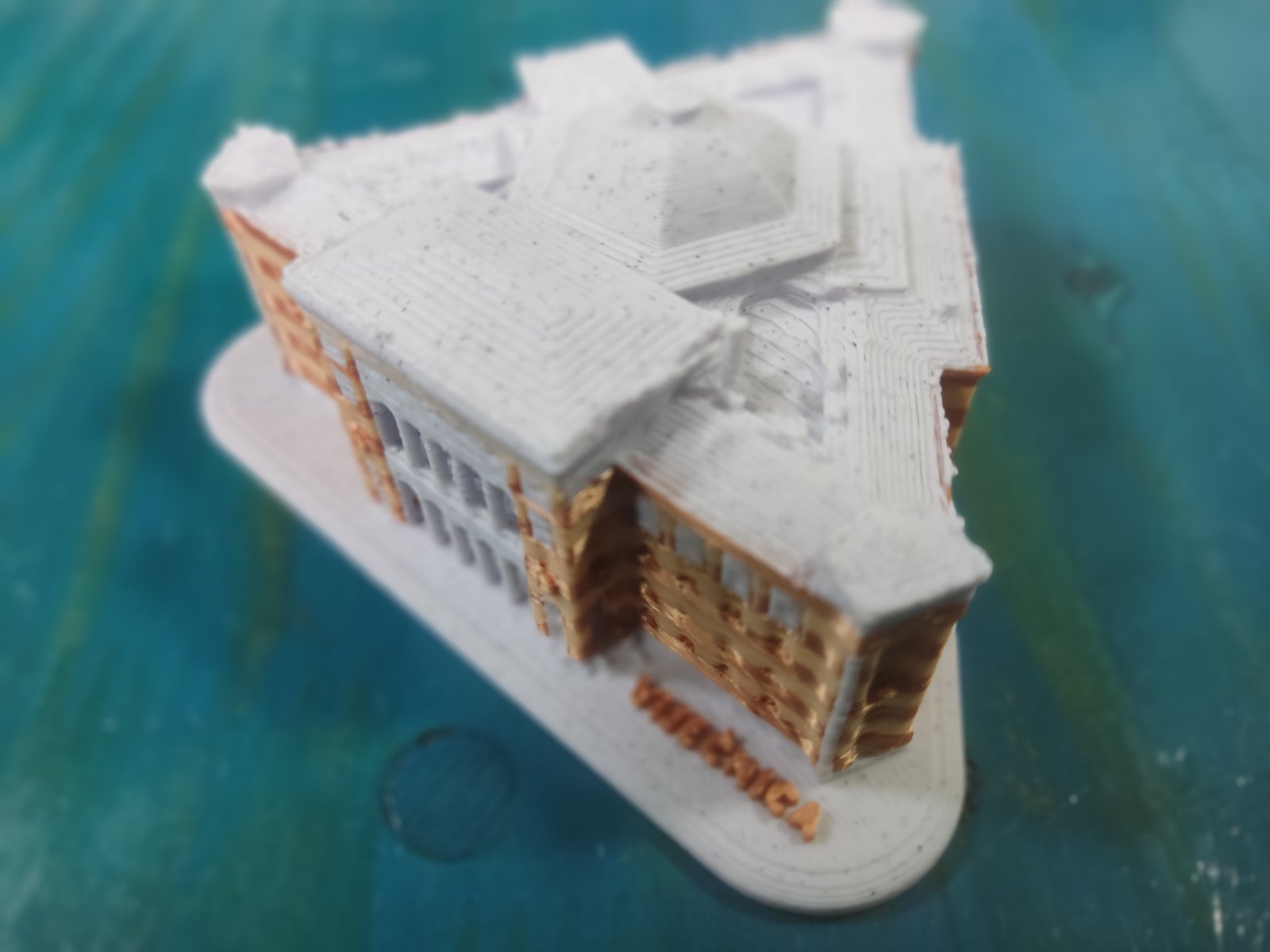
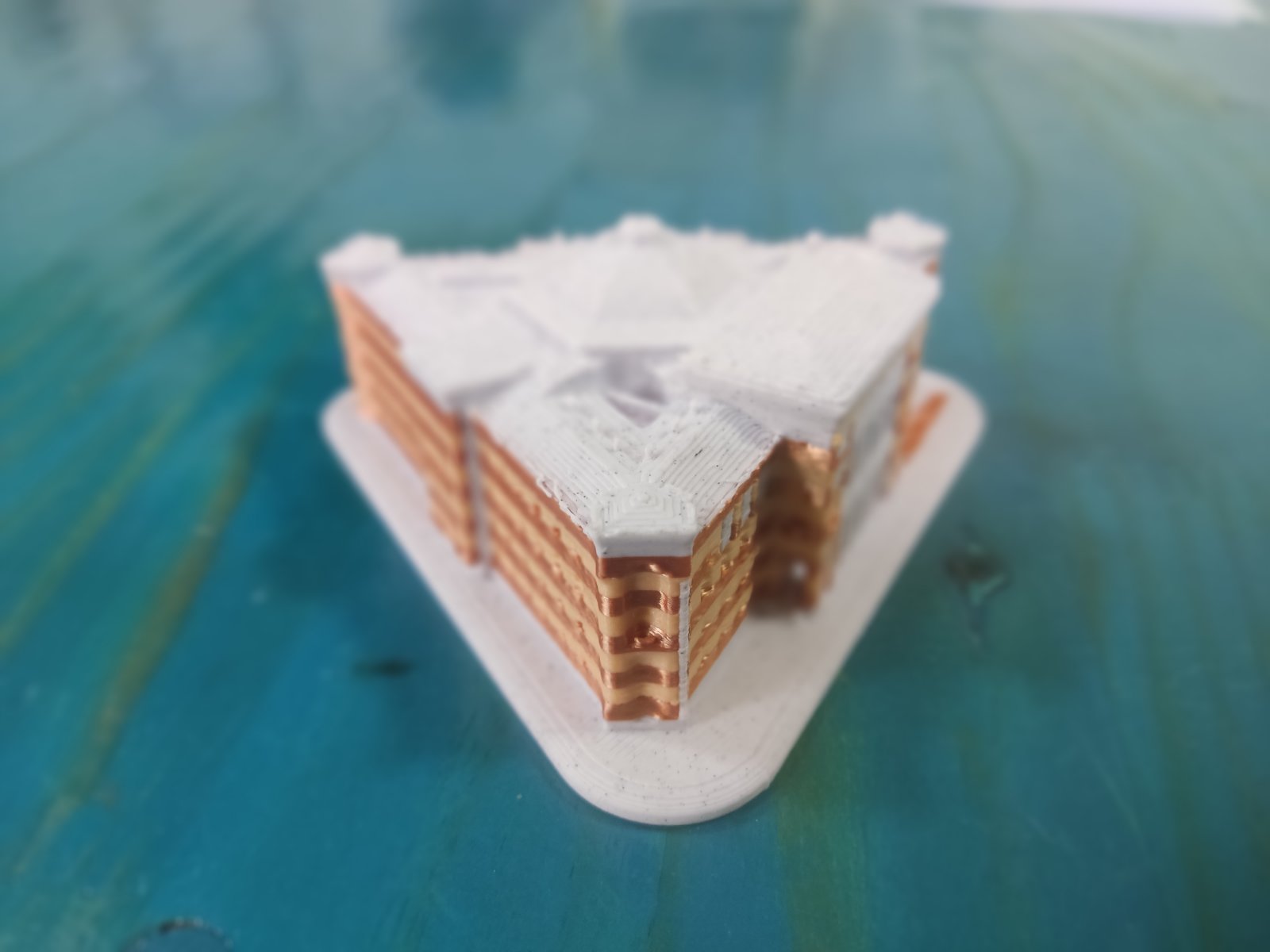
Sarajevo City hall – Smart 3D printed souvenir
- Dimension:8cm (W) × 9cm (H) × 12cm (D)
- Material:Made from eco-friendly, biodegradable plastice
- Design and production:Expertly designed for 12 hours, 3D printed in 7 hours
- Packing:Eco-friendly and recyclable; return it and receive a discount on your next purchase
- Maintenance instructions:Keep away from direct sunlight; handle with care, especially during transport
- Impact:With every purchase, you help restock local rivers and lakes
- Interactive feature:Scan the QR code and explore the rich history of Sarajevo
- Ecology:Part of the funds from the purchase of this souvenir will be used for restocking lakes and rivers in Bosnia and Herzegovina
Made in Bosnia and Herzegovina
ABOUT THE BUILDING
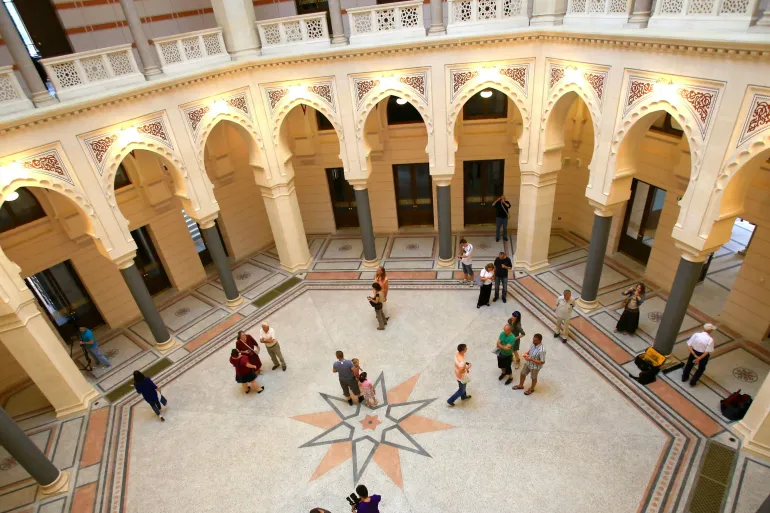
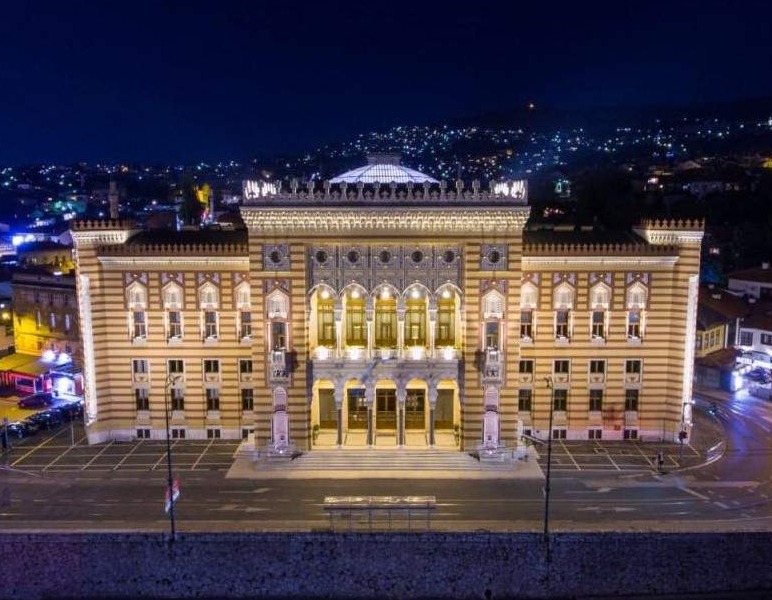
There are places in Sarajevo that we no longer see as just buildings, but as symbols that have changed their role so many times throughout history that they seem to have taken on a life of their own. One such place is Sarajevo’s City Hall – a building whose brick-red and ochre facade makes it impossible to pass by without stopping to think.
Located at the crossroads between Baščaršija and Dariva, right on the banks of the Miljacka River, the City Hall has been a source of both admiration and sadness for decades. Today, it is a symbol of culture and knowledge, but also a reminder of suffering and resistance, especially for those who remember its flames from 1992. Today, it once again hosts books, exhibitions, concerts and conferences, as if it had never burned – but the traces have not been erased.
Located at the crossroads between Baščaršija and Dariva, right on the banks of the Miljacka River, the City Hall has been a source of both admiration and sadness for decades. Today, it is a symbol of culture and knowledge, but also a reminder of suffering and resistance, especially for those who remember its flames from 1992. Today, it once again hosts books, exhibitions, concerts and conferences, as if it had never burned – but the traces have not been erased.
HISTORY
The construction of the City Hall began at the end of the 19th century, when Sarajevo was under Austro-Hungarian rule and the city was acquiring its new, European contours. The idea was to create a representative building that would serve as the city hall, or administrative center of government.
Construction began in 1892, and the grand opening was held in 1896. The first draft was made by the Czech architect Karel Pařík, but after disagreements with the authorities, the project was taken over by Aleksandar Wittek, who sought inspiration in the Islamic architecture of Egypt and Spain. After his untimely death, the construction was completed by Ćiril Iveković. This mix of different authors and influences is still visible today in the combination of oriental and Western European elements in the very form of the building.
Initially serving as the city administration, in 1949 it became the National and University Library of Bosnia and Herzegovina, thus taking on a new, symbolically even more important role – the guardian of knowledge, language and culture.
On the night of 25–26 August 1992, during the Siege of Sarajevo, the City Hall was shelled and set on fire. Almost 2 million books, manuscripts, archives and documents were destroyed. Only after more than two decades of renovation did the City Hall reopen in 2014.
Construction began in 1892, and the grand opening was held in 1896. The first draft was made by the Czech architect Karel Pařík, but after disagreements with the authorities, the project was taken over by Aleksandar Wittek, who sought inspiration in the Islamic architecture of Egypt and Spain. After his untimely death, the construction was completed by Ćiril Iveković. This mix of different authors and influences is still visible today in the combination of oriental and Western European elements in the very form of the building.
Initially serving as the city administration, in 1949 it became the National and University Library of Bosnia and Herzegovina, thus taking on a new, symbolically even more important role – the guardian of knowledge, language and culture.
On the night of 25–26 August 1992, during the Siege of Sarajevo, the City Hall was shelled and set on fire. Almost 2 million books, manuscripts, archives and documents were destroyed. Only after more than two decades of renovation did the City Hall reopen in 2014.
BUILDING STYLE
The town hall was built in the pseudo-Moorish style, which in that period was often used in Austria-Hungary for representative buildings in Bosnia and Herzegovina. That style was an attempt to preserve the "oriental spirit" of Bosnia in architecture, but in accordance with the vision of modernization that the Monarchy had.
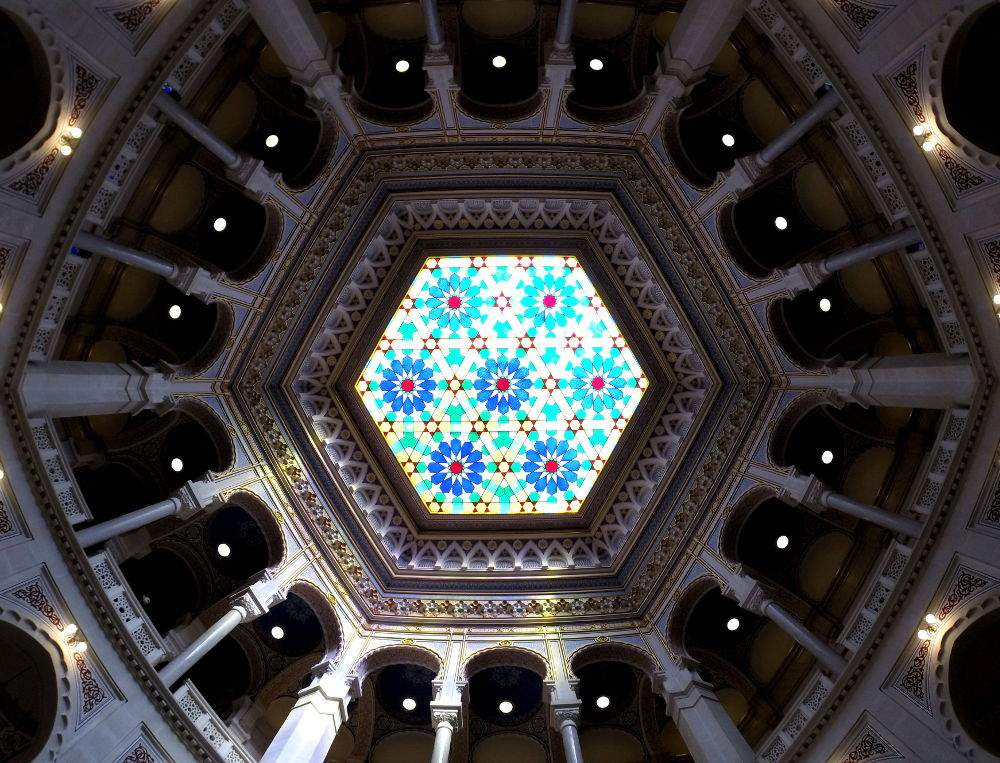 The fusion of Arabic, Moorish and Byzantine ornamentation is evident in the arches, geometric patterns, stained glass windows and the richly detailed facade. The interior is equally opulent – the staircases, galleries and central hall under a glass dome tell the story of the architectural opulence of that era.
Although it was built under the influence of European power, the Town Hall retained the spirit of the Orient in its construction style, thus creating a unique combination that we recognize today as one of the most impressive examples of architecture in Bosnia and Herzegovina.
The fusion of Arabic, Moorish and Byzantine ornamentation is evident in the arches, geometric patterns, stained glass windows and the richly detailed facade. The interior is equally opulent – the staircases, galleries and central hall under a glass dome tell the story of the architectural opulence of that era.Although it was built under the influence of European power, the Town Hall retained the spirit of the Orient in its construction style, thus creating a unique combination that we recognize today as one of the most impressive examples of architecture in Bosnia and Herzegovina.
MATERIALS OF WHICH THE TOWN HALL IS MADE
The three main materials used for the construction of the Sarajevo City Hall are stone, brick and wood.
Stone, as the basic building material of the exterior walls, was used for its strength, durability and ability to bear the weight of the monumental structure. Its natural texture and tones further emphasize the magnificence of the Oriental-Moorish style. In this context, the stone symbolizes the resilience and rootedness of Sarajevo's identity throughout the centuries.
Brick served as a secondary, but equally important material in the construction of walls and domes, enabling faster construction and thermal insulation. The use of brick represents a combination of functionality and aesthetics, and reminds of the local spirit and accessibility of construction solutions from that time.
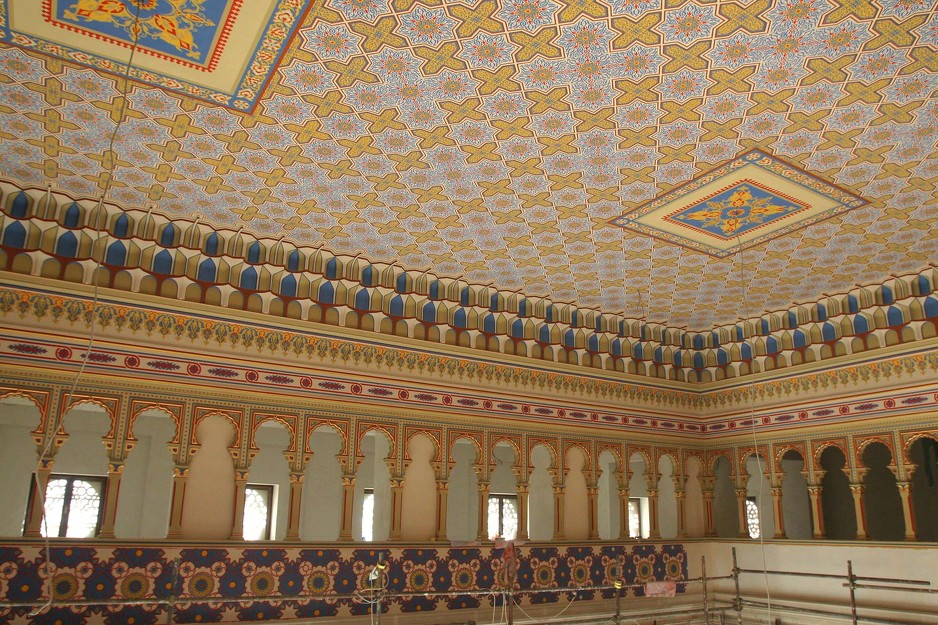
Wood was the main material in the interior constructions – columns, beams, decorative carvings and furniture. Its warm texture and formability have been used to create rich, detailed interiors. In the context of the Town Hall, wood symbolizes the human hand, the precision of craftsmanship and the spirit of artistic tradition.
Stone, as the basic building material of the exterior walls, was used for its strength, durability and ability to bear the weight of the monumental structure. Its natural texture and tones further emphasize the magnificence of the Oriental-Moorish style. In this context, the stone symbolizes the resilience and rootedness of Sarajevo's identity throughout the centuries.
Brick served as a secondary, but equally important material in the construction of walls and domes, enabling faster construction and thermal insulation. The use of brick represents a combination of functionality and aesthetics, and reminds of the local spirit and accessibility of construction solutions from that time.
Although stone, brick and wood were common materials of that era, their carefully designed combination resulted in the construction of one of the most impressive architectural symbols of Sarajevo. Their return to the reconstruction process after the war further confirmed the strength of authenticity and respect for the past, leaving the Town Hall as an eternal reminder of perseverance, identity and the beauty of joint creation.
REFERENCES
- Gradska vijećnica Sarajevo, Historija, https://www.vijecnica.ba/bs/historija
- Kulturno sportski centar i radio Ilijaš, Na današnji dan otvorena Gradska vijećnica u Sarajevu,
https://radioilijas.ba/na-danasnji-dan-otvorena-gradska-vijecnica-u-sarajevu/ - Sarajevo kroz vrijeme, Tatjana Neidhardt, Dječija knjiga, Sarajevo 2019, pp. 162-165, ISBN 9958-26-027-1;
- Destination Sarajevo, Vijećnica, https://sarajevo.travel/ba/sta-raditi/vijecnica/174
- Grad Sarajevo, City Life, Vijećnica, 8.10.2019., https://www.sarajevo.ba/bs/article/1180/vijecnica